The First 24 Hours Decide Everything
Reputation is hard won and fast lost. In a digital-first world where issues escalate in minutes, preparedness is what separates resilient businesses from reactive ones.

The businesses that survive crises best are rarely the ones with the fewest problems.
They’re the ones that prepared before anyone else thought they needed to.
Because in today’s environment, crises don’t arrive in neat, manageable packages anymore. They escalate fast, across multiple fronts, often before leadership teams have even aligned internally. A supplier issue becomes a regulatory issue. A cyber incident becomes a trust issue. An operational problem becomes a national news story.
And increasingly, the gap between “incident” and “reputational crisis” is measured in hours, not days.

Whether it’s supply chain disruption, ESG scrutiny, cyber security concerns, activist stakeholders, regulatory pressure or misinformation spreading online, organisations are operating in a far more volatile and exposed environment than they were even three years ago.
The problem is that most businesses still respond to crises reactively.
No clear ownership. No agreed messaging. No stakeholder map.No decision-making framework. No trained spokespeople. No understanding of how a story could evolve once media, customers, employees, regulators and social channels all collide at once.
That’s where preparedness matters.
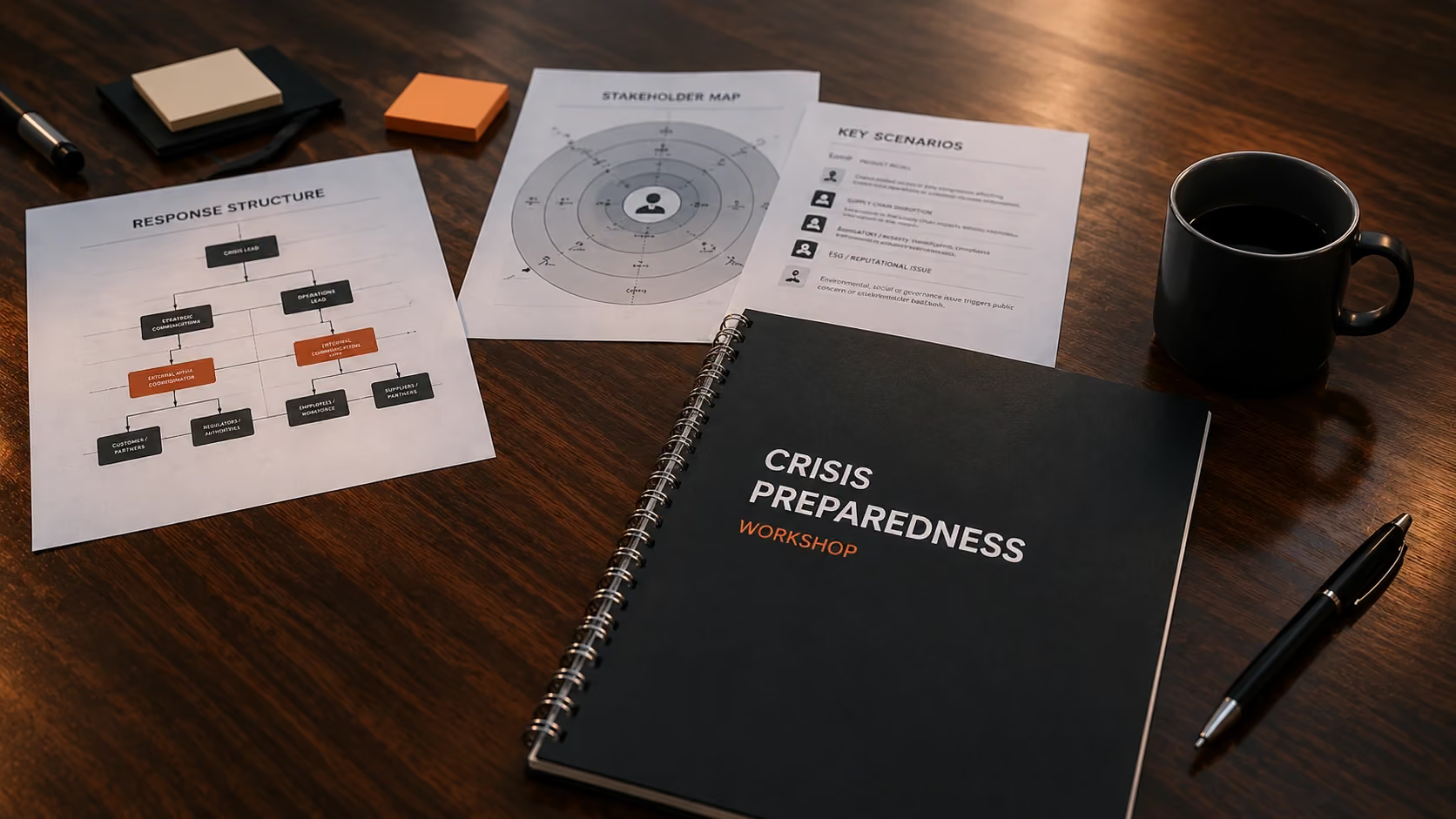
At Brand Potential and Houston PR, we’ve developed Crisis Preparedness Workshops designed to pressure test organisations before the pressure arrives for real.
These are not theoretical PR exercises.
They are practical, leadership-level sessions built around realistic crisis scenarios tailored to your business, sector and stakeholder landscape. Together, we explore how an issue escalates, where vulnerabilities exist, who needs to respond, how communications should be managed, and what happens when difficult questions start coming from media, customers, employees, regulators or investors.
The sessions are designed to challenge assumptions, expose gaps and strengthen decision-making under pressure.
Key areas typically include:
• When an operational issue becomes a reputational crisis
• Stakeholder mapping and communications protocols
• Leadership response structures and escalation processes
• Media handling and spokesperson preparedness
• Scenario testing and live-response exercises
• Internal communications and employee management
• Regulatory, compliance and reputational risk considerations
The outcome is simple: greater clarity, faster response times, stronger alignment and better resilience when it matters most.
Because the real risk in a crisis is rarely the first headline.
It’s what happens in the hours after it.
If you’d like to discuss a Crisis Preparedness Workshop for your organisation, get in touch to arrange an introductory conversation.