What the UK's Under-16 Social Media Ban Really Means for Brands: Brand Potential Asked Our Marketers and Kids the Same Questions
Brand Potential brought together our specialists from social, performance marketing and search before surveying more than 30 under-16s. Their responses reveal surprising common ground and a glimpse of what the future of marketing could look like.
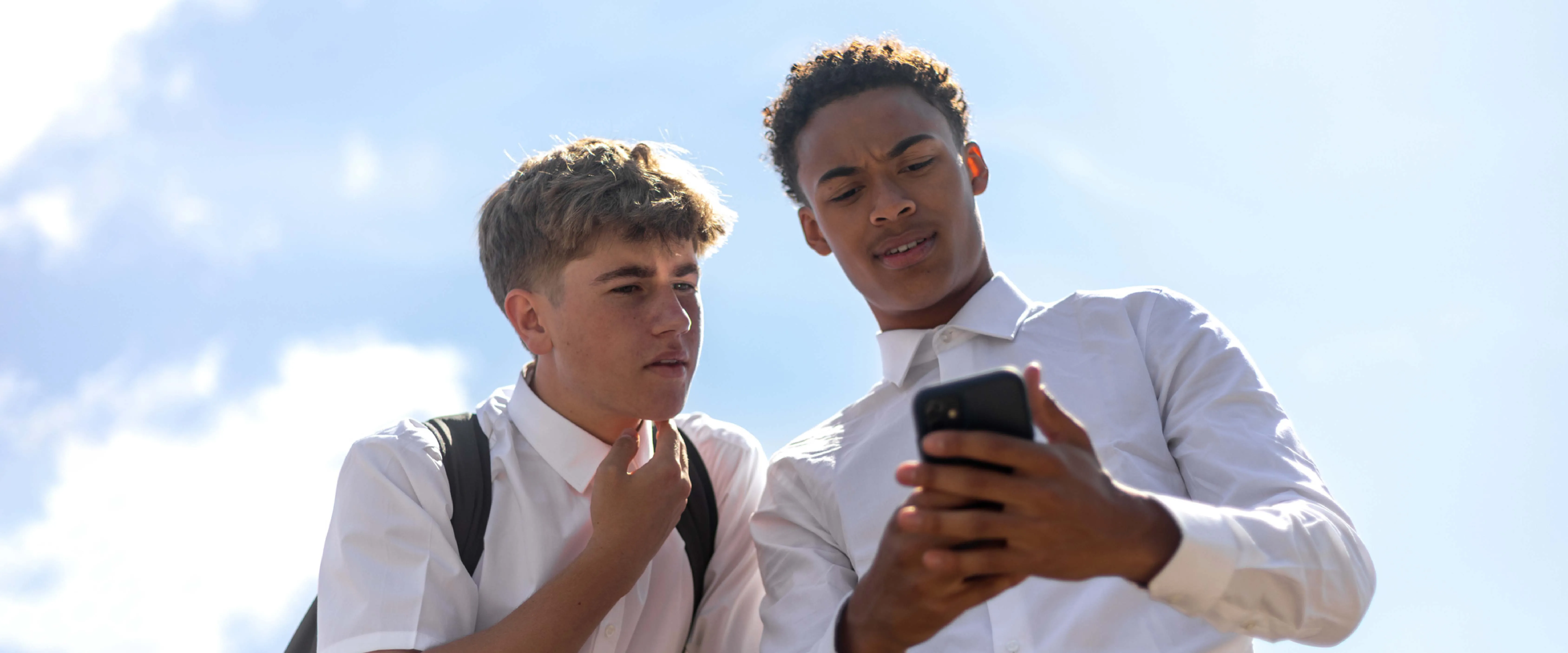
The debate around the UK's proposed under-16 social media ban has largely been framed as a battle between generations.
Parents want to protect their children. Teenagers don't want their freedoms restricted. And brands are wondering what it means for reaching the next generation of consumers.
At Brand Potential, we thought the conversation was missing an important perspective.
What do young people actually think?
So, we asked both sides.
We brought together our digital marketing specialists to discuss what the proposed restrictions could mean for brands, platforms and the future of digital engagement. Then we surveyed more than 30 under-16s to understand how they use social media, what they'd miss and what they'd change.
What we discovered challenged many of our assumptions.
The biggest takeaway?
Adults are debating whether a ban will work. Young people are asking for a better digital world.
This is bigger than marketing

Susanna Guri, Social Media Account Director at Brand Potential, believes the significance of this debate extends far beyond advertising.
"Social media is most young people's first touchpoint with anything new to them. Whether that's new ideas, hobbies, brands, products or people. Their personalities, preferences and points of view are shaped first by algorithms and second by the world around them."
If Gen Beta doesn't access social media until 16, that relationship could fundamentally change. Young people may experience the world around them first and algorithms second. That's not simply a marketing shift. It's a cultural one. Interestingly, one of the older teenagers we surveyed agreed that social media has become too influential.
"We enjoy the benefits of social media while still recognising that it should be restricted because, having spent half our childhoods online, we know how addictive it can be."
She reflected that young people are exposed to huge amounts of unfiltered information.
"We don't know what's real anymore."
She also raised a concern marketers rarely discuss.
"At our age, our brains are not experienced or mature enough, so advertising may trick our brains easier without us even realising it."
It's a remarkably self-aware observation and one that suggests young people understand the commercial realities of social media better than adults often assume.
The question brands should really be asking
Much of the marketing conversation has centred around losing access to younger audiences. Susanna believes that's the wrong starting point.
"Who are your customers of tomorrow?"
She continues:
"If your target audience, 20 or 30 years from now, is no longer scrolling, will you know how to reach and engage them?"
For years, brands have relied on social media to build awareness long before consumers enter their core demographic. That strategy may need to evolve.
As Susanna points out:
"Customers, current, new and future, don't stay in one place and we need to be able to meet them where they're at, no matter where that is."
The under-16s we surveyed seem to support that idea. When asked where they'd discover trends, products and brands without social media, they suggested friends, Google, TV and websites. One teenager admitted there could be a downside.
"It would become much more difficult to discover small or niche businesses, creators or artists to start up."
The implication for brands is clear. Discovery won't disappear. But it may become harder to engineer.
Trust could become more valuable than targeting

Hannah Williams, Social Media Manager at Brand Potential, sees the proposed restrictions as an opportunity to rethink success.
"If restrictions reduce reliance on broad reach social content, marketers may need to focus more on building trusted communities and creating content that delivers genuine value rather than chasing engagement."
It's a sentiment that echoes what we heard from young people. When we asked who they trusted most for recommendations, one teenager gave a nuanced answer.
"If I'm looking for something specific, I trust creators because they have professional experience."
But when it came to overall trust, the answer changed.
"I trust friends more, knowing they wouldn't endorse something they haven't tried or don't like."
Hannah believes this shift could redefine digital marketing itself.
"The biggest impact could be a shift from optimising for reach and engagement to balancing performance with greater accountability."
Friends are still the biggest influencers
Perhaps the biggest surprise from our research was who under-16s trust. Not celebrities. Not influencers. But Friends. One teenager told us:
"Brands can fake it. Friends are easier to trust."
That insight resonated strongly with Cath McDermott, Head of Performance Marketing at Brand Potential.
"Marketers may need to focus more on building trust and community through channels that don't rely on direct access to younger audiences."
Cath believes the proposed restrictions could reshape the creator economy itself.
"If younger teens are no longer accessing social media before 16, what takes its place? Another online space, real life, or something entirely new?" She adds:
"Brand loyalty is often formed during these years. The big question is where that influence will come from next."
Could search become the new discovery engine?
One of the most fascinating discussions centred around discovery.

Irina Ginghina, Head of SEO and GEO at Brand Potential, believes social media has quietly become the internet's primary search layer for younger audiences.
"For years, under-16s have treated TikTok and YouTube as their primary search engines. If these are restricted, we will see a displacement of search intent."
Rather than viewing that as a challenge, Irina sees an opportunity.
"The challenge for us is becoming the new discovery engine through high-quality, authoritative brand content."
Interestingly, one of the teenagers we surveyed highlighted another aspect of discovery.
"Social media expands my world and makes it richer, allowing me to see experiences I might never have come across otherwise. It's a source of inspiration and expansion."
This reinforces an important point. Young people don't simply use social media to consume content. They use it to explore possibilities.
The YouTube question
One platform repeatedly emerged from both the marketing discussion and our under-16 survey.
YouTube.
Many of our specialists questioned whether it should even be considered alongside traditional social media. The young people we spoke to certainly viewed it differently. A 13-year-old described it as:
"Entertainment, learning and finding out more about hobbies."
Another simply said:
"YouTube, but not Shorts."
The distinction is revealing.
Young people already separate entertainment from education and creativity. Future regulation, and future marketing, may need to become equally nuanced.
What surprised us about under-16s
Perhaps the biggest misconception challenged by our research was that teenagers would resist any restrictions. That wasn't what we found. Many openly recognised the downsides. A 12-year-old told us one of the benefits of spending less time online could simply be:
"Less brainrot."
Others talked about better concentration and spending more time outdoors. At the same time, they were clear about what social media gives them. A 14-year-old said they'd miss:
"Easily making plans with friends."
Another told us:
"Finding out things about my hobbies."
One respondent simply said:
"Tutorials and learning stuff."
One older teenager reflected on something deeper.
"Social media helps me stay in contact with people I don't see regularly and helps me maintain friendships."
She also pointed out that for many young people today:
"It's an adult-free, restriction-free space for expressing ourselves."
Another observation stood out.
"Children's safety often means spending more time under parental supervision… social media helps bridge that gap by helping us feel closer to our friends."
This highlights one of the central tensions in the debate. Young people recognise the risks. But they also value the connections.
Young people don't want less social media
Perhaps the most important finding from our research is that under-16s aren't asking for social media to disappear. They're asking for it to improve. A young respondent suggested:
"Explicit content filters."
Another wanted:
"Better wording and warnings."
Others called for:
"Graded kids' accounts."
One teenager suggested:
"No anonymous accounts."
Another older respondent proposed:
"Separate online spaces for different ages with heavy restrictions, so teenagers can still connect without being exposed to content intended for older audiences." She added:
"One of the biggest issues is how platforms repeatedly recommend similar content, trapping us in unhealthy cycles or pushing content we didn't ask for."
Perhaps the most thought-provoking response from another young person simply said:
"Ban algorithms."
The message was remarkably consistent. Young people don't necessarily want less social media. They want safer, smarter social media.
So, what happens next?
Our conversations suggest the under-16 debate is part of much wider discussions around child safety, online wellbeing, data privacy and platform accountability. But perhaps the most interesting insight from Brand Potential's research isn't where marketers and under-16s disagree. It's where they agree.
Neither group believes the current system is ideal. Adults worry about safety, privacy and unintended consequences. Young people value connection, creativity and learning but want platforms to do a better job of protecting them. As Hannah Williams puts it:
"The biggest impact could be a shift from optimising for reach and engagement to balancing performance with greater accountability."
And Susanna Guri believes the implications could stretch well beyond today's headlines.
"The long-term impact could be that audiences become harder to reliably pin down in one place, and marketers will need to cast wider nets, diversify and un-silo their strategies to continue engaging them."
At Brand Potential, we believe that's the real story behind the UK's under-16 social media debate. This isn't simply a conversation about banning social media. It's about what kind of digital experiences we want the next generation to grow up with and what that means for the brands trying to earn their trust.
The adults are debating the ban.
The under-16s are asking for something better.
For brands, the smartest strategy may be to listen to both.